
For Tiffany and copper foil
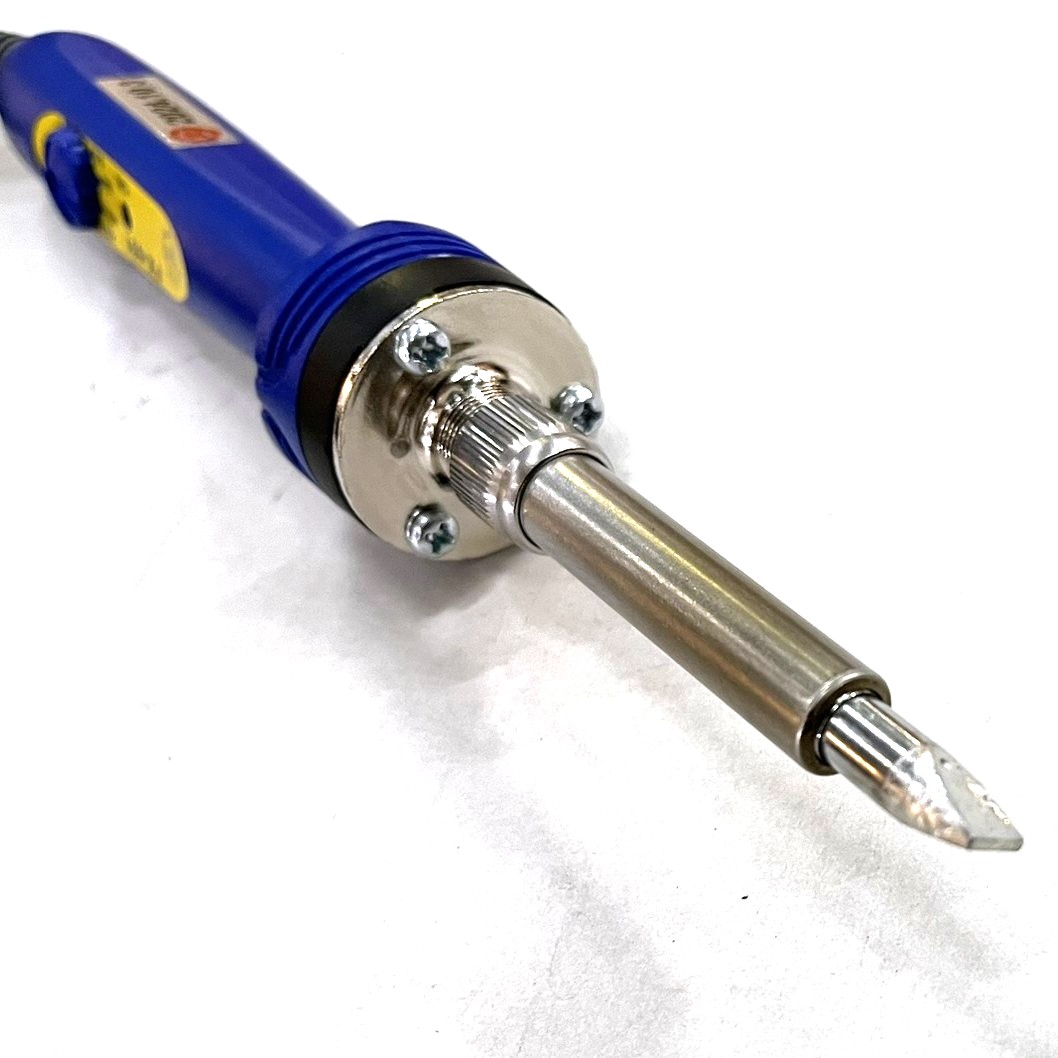
For Tiffany work, we recommend the Hakko FX-601. Its adjustable temperature, low weight and even heat output make it suitable for creating smooth solder seams over copper foil.
A good soldering iron for stained glass or Tiffany work should heat up quickly, retain enough heat and feel comfortable in your hand. But which soldering iron is the best choice today?
Do you still own a good older Weller soldering iron? Look after it. Older Weller models are generally robust and can often provide many more years of service.
| Position | Soldering iron | Best suited to | Main advantage |
|---|---|---|---|
| 1 | Hakko FX-601 | Tiffany, stained glass, hobbyists and professionals | Excellent temperature control and consistent heat |
| 2 | IFA soldering irons | Stained glass, studios and intensive use | Powerful and available as an ergonomic hammer-style model |
| 3 | Atten ST-2150D | Stained glass or Tiffany, depending on the selected tip | 150-watt peak power, digital control and excellent value |
| 4 | Startec 80W | Beginners, courses and occasional hobby use | Simple operation and a low purchase price |
The Japanese Hakko FX-601 takes first place. It is our favourite all-round soldering iron for Tiffany and stained-glass work.
The Hakko FX-601 has a power rating of 50 watts. This may seem modest compared with traditional 80, 100 or 200-watt irons, but its heating system uses the available power very efficiently. It heats up quickly, maintains its temperature well and provides sufficient heat for soldering copper foil and lead came.
The temperature is adjusted with a dial on the handle. The maximum temperature is approximately 540 °C.
The Hakko FX-601 is supplied with a straight screwdriver-shaped Hakko tip. This tip transfers heat over a broad contact surface and is suitable for Tiffany and stained-glass work.
Complete your Hakko with the matching Hakko soldering-iron stand. It keeps the hot iron stable and safe and includes a cleaning sponge.
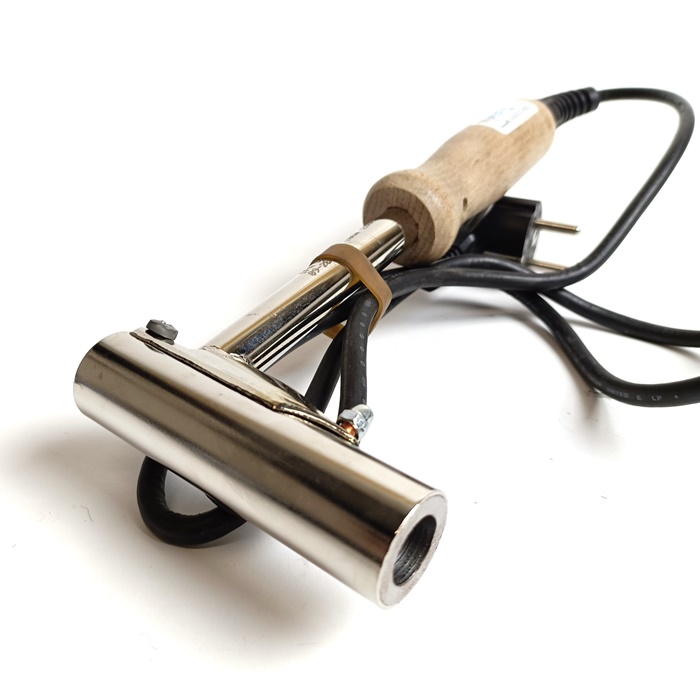
IFA takes second place. IFA soldering irons are robust, powerful and suitable for stained-glass and Tiffany work.
For general use, the IFA PRO G08 100-watt model is a strong traditional option. It is supplied with a broad long-life IFA tip.
The most important advantage of IFA is the 180-watt IFA PRO B15 hammer-style model.
A conventional straight soldering iron can make you lean forward over the glazing bench. During prolonged soldering, this may place additional strain on your back, neck, shoulders and wrist.
A hammer-style model has a differently positioned handle and an angled tip. This allows you to remain more upright while the tip rests flat on the stained-glass panel.
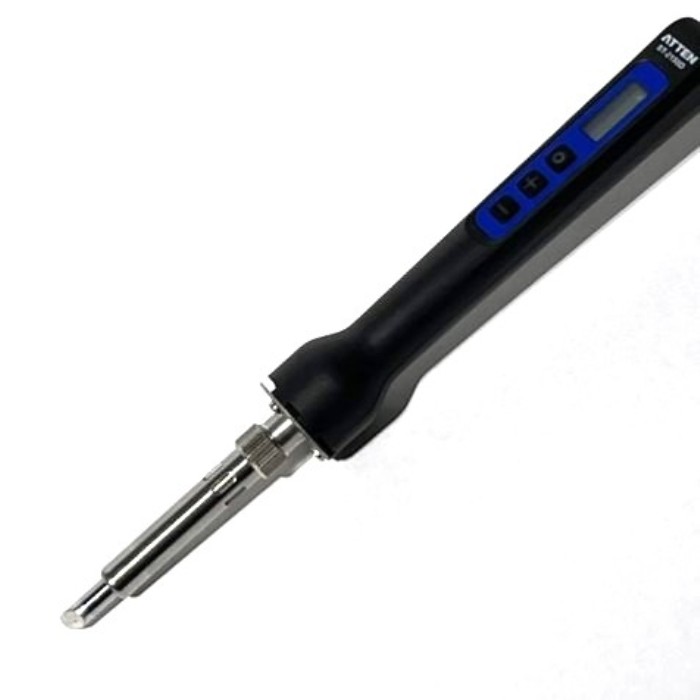
The Chinese Atten ST-2150D takes third place. It combines 150-watt peak output with digital temperature control, an LCD display and rapid heat-up.
Its PID control helps keep the selected temperature stable. The temperature can be adjusted from 250 to 480 °C. Automatic sleep mode starts after ten minutes without use, followed by automatic shut-off after twenty minutes.
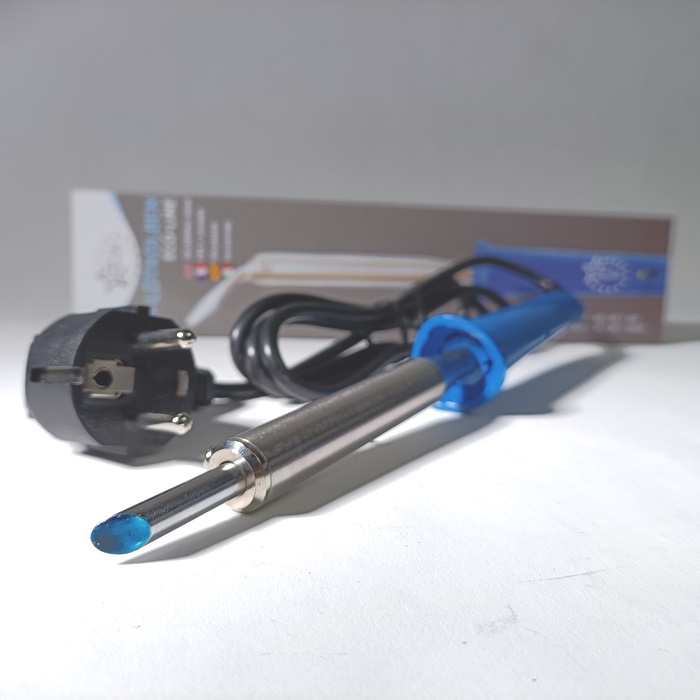
Startec takes fourth place. The Startec 80W is a straightforward soldering iron without digital temperature control or advanced functions.
It is an affordable option for beginners, courses and occasional hobby use. For regular or professional use, Hakko, IFA or Atten provides more control, power or ergonomic benefits.

For around thirty years, Weller dominated the market for professional stained-glass and Tiffany soldering irons. Older Weller models were known as powerful and reliable tools.
Over the past two years, however, Fenix Glas has received far more quality complaints about new Weller soldering irons. In our experience, the current quality no longer matches the standard we had come to expect from Weller.
For that reason, we started looking for alternatives and now recommend Hakko, IFA, Atten and Startec.
Do you own an older Weller soldering iron that still works well? Do not throw it away. Older Weller irons can continue to provide years of service when properly maintained.
As long as suitable models remain available, Fenix Glas will continue to supply compatible tips for older Weller irons. Always check the exact Weller model number before ordering.
View available Weller soldering tipsFor Tiffany work, we recommend the Hakko FX-601. Its adjustable temperature, low weight and even heat output make it suitable for creating smooth solder seams over copper foil.
The Hakko FX-601 is our first choice for general stained-glass work and is supplied with a broad, straight screwdriver-shaped Hakko tip. If you prefer a traditional, heavier iron, choose the IFA PRO G08.
The 180-watt IFA PRO B15 hammer-style model supports a more upright working position at the glazing bench.
Choose the Atten ST-2150D for 150-watt peak output, an LCD display and digital temperature regulation.
The Hakko FX-601 is reliable and adjustable. Startec offers an affordable alternative for courses with a smaller budget.
The Startec 80W is a simple entry-level choice for occasional hobby use.
Wattage alone does not determine performance. The heating element, temperature control, tip size and speed of temperature recovery are also important.
A modern 50-watt Hakko FX-601 can compete with heavier traditional irons. Conventional models of 80 to 100 watts are generally suitable for stained glass and Tiffany. A 180-watt hammer-style model provides additional heat reserve for intensive professional use.
Do not choose a soldering iron solely on the basis of wattage.
A broad, flat tip usually transfers heat to lead, copper foil and solder more effectively than a thin pointed tip.
Depending on the soldering-iron model, straight, angled or hammer-style tips may be available. Always use a tip that the manufacturer specifies as compatible with your exact model.
When choosing a replacement tip, check:
A soldering tip usually consists of a heat-conductive copper core with a protective outer layer. If this coating is damaged, the tip may oxidise and wear prematurely.
Keep the tip coated with solder during use and remove flux residues regularly.
Use a suitable sponge, brass wool, sal ammoniac block or tip activator. Never sand, grind or file a long-life tip.
Place a hot iron in a stable, heat-resistant stand and switch it off when it will not be used for a longer period.
Work in a well-ventilated room and avoid breathing soldering fumes directly. Use local exhaust ventilation or a solder-fume extractor during regular or prolonged work.
Keep flammable materials away and wash your hands carefully after working with lead, solder and flux. Do not eat or drink in the work area.
Fenix Glas supplies soldering irons, compatible tips, stands, solder, fluxes and other supplies for stained glass and Tiffany throughout Europe.
Not sure which tip fits your soldering iron? Include the brand, exact model number and preferably the diameter and a photograph of the current tip when contacting us.
Email:
groothandel@fenixglas.nl
Telephone:
+31 (0)161 23 44 23