We use cookies to make your experience better. To comply with the new e-Privacy directive, we need to ask for your consent to set the cookies. Learn more.

SKU
4010020
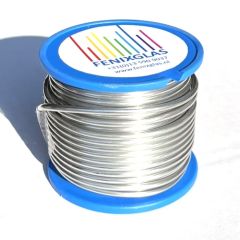
60/40 Solder on Spool – 3 mm Solid Wire, 1 kg
60/40 solder on spool: solid wire solder made of 60% tin and 40% lead, the go-to standard for stained glass and Tiffany. Its low melting point keeps your lead came intact, while it flows smoothly and builds beautiful rounded beads on copper foil.
- Alloy: 60% tin (Sn) / 40% lead (Pb)
- Melting range: 183 – 188 °C
- Diameter: 3.0 mm solid wire, no flux core
- 1 kg spool, approx. 16 metres of wire
- In stock, ready to ship
Please note: no additional business discount applies to this offer.
In stock
€37.85 per kg

60/40 solder on spool for stained glass and Tiffany
60/40 solder is the most widely used solder alloy in glass art. This wire solder consists of 60% tin and 40% lead and melts between 183 and 188 °C. That low, short melting range makes 60/40 ideal for glasswork: you solder at a temperature that keeps the lead came intact. The solder flows out easily but sets again quickly, so you can draw neat, shiny, nicely rounded solder beads without the solder running off or dripping through the seam.
This solder comes as 3.0 mm solid wire on a 1 kg spool. That's roughly 16 metres of wire, easy to unwind from the reel in small lengths as you work.
Applications
- Stained glass: for soldering the joints and intersections of lead came.
- Tiffany (copper foil technique): for tinning copper foil and building smooth, rounded decorative beads on lamps, panels and objects.
- Restoration: for repairing existing stained glass windows and Tiffany pieces.
- Crafts and model making: for decorative soldering on copper, brass and lead.
Solid wire solder: always use a flux
This solder is solid, so it has no flux core. That's intentional: in glass art you apply the flux separately, exactly where you're going to solder. Without flux, the solder won't bond properly.
- Stained glass: use stearin oil or soldering paste on the lead joints.
- Tiffany: use a liquid flux such as Old Master Flux, applied with a metal flux brush.
How to solder with 60/40
- Clean the copper foil or lead and apply flux.
- Set your soldering iron. Many glass artists work at around 370 – 400 °C. Don't solder hotter than necessary: with stained glass you risk melting the lead and pushing holes into your lead came.
- Melt the solder onto the seam with the tip and move steadily and evenly to create a smooth, rounded bead.
- After soldering, remove flux residue with water and a mild cleaning agent.
- Want a dark or copper finish? Treat the seams with patina.
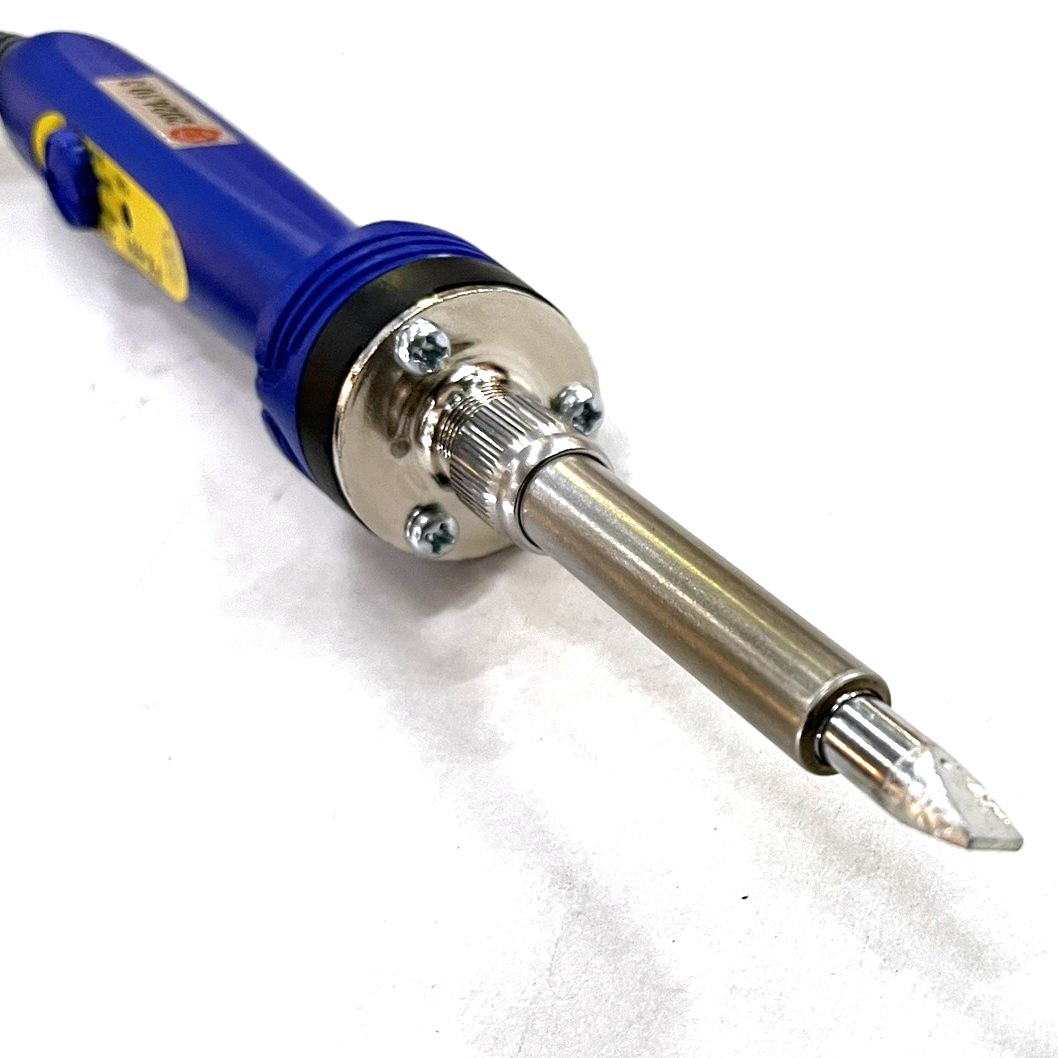
A great iron for this work is the Hakko FX-601 soldering iron.
60/40 or 50/50: which solder should you choose?
| 60/40 solder | 50/50 solder | |
|---|---|---|
| Composition | 60% tin / 40% lead | 50% tin / 50% lead |
| Melting range | 183 – 188 °C (low) | 183 – approx. 215 °C (higher) |
| Soldering temperature | Lower, so safe for lead came | Higher, with a risk of melting the lead |
| Stained glass | Recommended | Not recommended |
| Tiffany | Recommended | Possible |
Our advice: always choose 60/40 for stained glass. Because 50/50 has a higher melting point, you have to solder hotter, which risks melting the lead came or pushing holes into it.
Prefer lead-free? Take a look at our lead-free solder.
Technical specifications
| Alloy | Sn60Pb40 (60% tin, 40% lead) |
|---|---|
| Melting range | 183 – 188 °C |
| Type | Solid wire, no flux core |
| Diameter | 3.0 mm |
| Weight | 1 kg per spool |
| Wire length | approx. 16 metres per kg |
| Suitable for | Stained glass, Tiffany, restoration, crafts |
| Safety data sheet (MSDS) | English · German · French · Polish |
Working safely with lead-based solder
60/40 solder contains lead. Always work safely:
- Make sure there is good ventilation, or use a fume extractor.
- Do not eat, drink or smoke while working, and wash your hands afterwards.
- Keep solder out of the reach of children.
- Do not use lead-based solder on items that come into contact with food or drinking water.
Read the safety data sheet (MSDS) before use.
Why buy your solder from Fenix Glas?
- Specialists in stained glass and Tiffany, with expert advice on materials and techniques
- Wide range of solder, fluxes, lead came and copper foil
- Shipped straight from stock at our wholesale warehouse
Need advice or interested in larger quantities? Contact us on +31 (0)13 590 9037 or at groothandel@fenixglas.nl.
Frequently asked questions
Which solder should I use for stained glass?
60/40 solder is the solder of choice for stained glass. Its low melting point lets you solder at a temperature that keeps the lead came intact. We do not recommend 50/50 solder for stained glass: its higher melting point means you have to solder hotter, which can unintentionally melt the lead or push holes into it.
Which solder should I use for Tiffany?
60/40 is also the standard for Tiffany. Its short melting range means it sets quickly, so you can build beautiful, rounded, smooth beads on copper foil.
Do I need anything besides the solder?
Yes. This solder is solid wire, so you always need a flux: stearin oil or soldering paste for stained glass, or liquid flux for Tiffany.
How many metres of solder are on a spool?
A 1 kg spool of 3 mm wire contains approximately 16 metres of solder.
What temperature should I set my soldering iron to?
Many glass artists work with 60/40 at around 370 – 400 °C. Start low and increase the temperature until the solder flows smoothly. Don't solder hotter than necessary, especially with stained glass.
Related Products